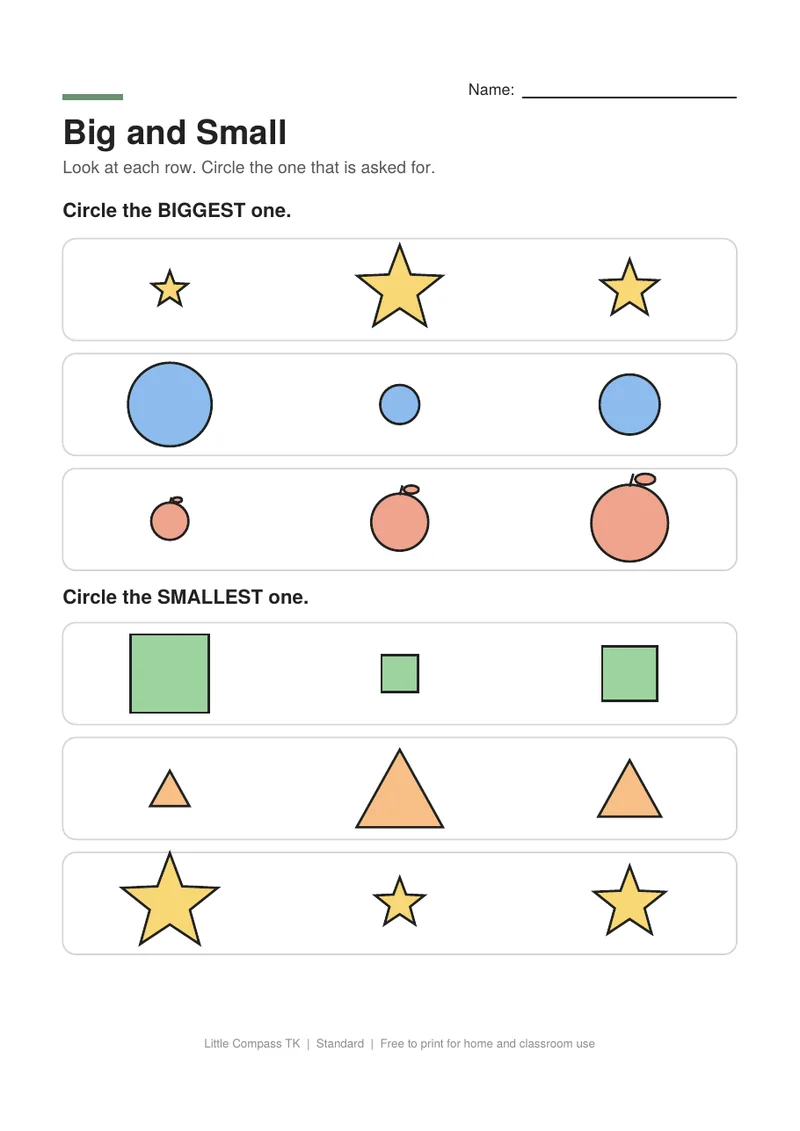
Big and Small TK worksheet
- Ages 4-5
- About 8 minutes
- Early Math
- You need: Pencil or crayon
A note for parents
Comparing sizes builds the vocabulary of measurement: biggest, smallest, bigger, smaller. It takes about 8 minutes, and the shapes in each row are the same kind so only the size changes.
How to help
- Ask them to put their finger on the biggest one before circling.
- Practice with real objects: line up three spoons or three cups.
- Introduce "medium" as the one in between.
Take it further
Compare real things around the house: the biggest and smallest shoe, the biggest and smallest cup. Notice that size depends on what you compare to. A spoon is small next to a pot but big next to a pea. Using words like 'bigger than' and 'smaller than' is more valuable here than getting every answer right.
Choose "Actual size" or "100%" when printing. A4 is 210 x 297 mm; US Letter is 8.5 x 11 in. The black-and-white version uses less ink.
More from Week 4: Patterns and Sizes
- Thinking Skills
- ~10 min
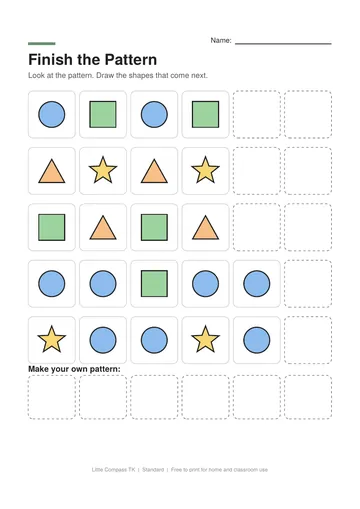
Finish the Pattern
Extend AB, AAB, and ABB patterns, then make your own.
- Fine Motor
- ~10 min
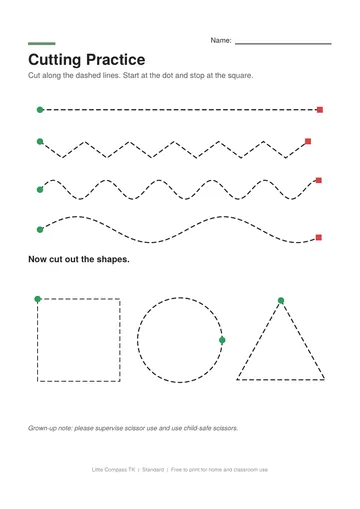
Cutting Practice
Cut along straight, zigzag, wavy, and curved lines, then cut out three shapes.
- Thinking Skills
- ~10 min
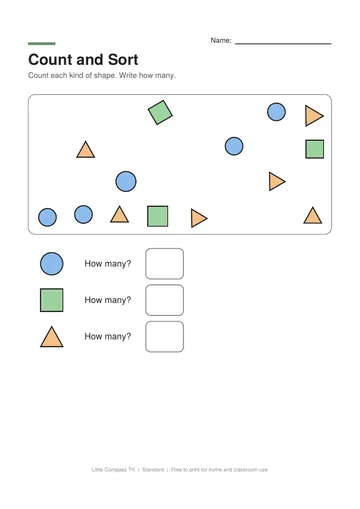
Count and Sort
Count each kind of shape in a mixed-up picture and write how many.
- Thinking Skills
- ~8 min
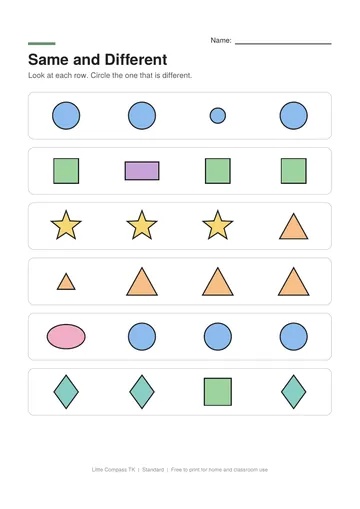
Same and Different
Look at each row and circle the shape that is different.
- Fine Motor
- ~8 min
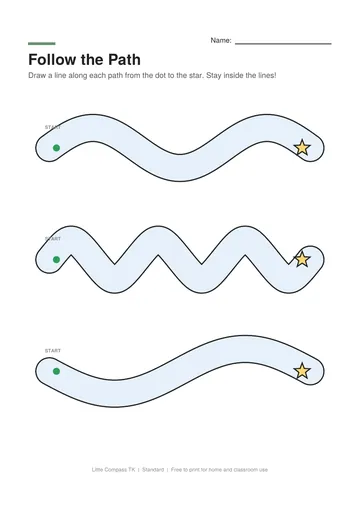
Follow the Path
Draw a line along each path from the dot to the star without leaving the lines.